
Debt Collection in the Netherlands
- Debt collection in the Netherlands, conducted locally.
- Risk-free. Pay only upon success.
- 9,5 % in commission.

 An international collection agency that is rated 9,4 out of 10 based on 72 reviews on Kiyoh!
Debt recovery Services in the Netherlands
Are you looking for debt collection in the Netherlands? Then Oddcoll is here for you. Our local debt collection specialists on site in the Netherlands are ready to step in to help you. Read on to see how.
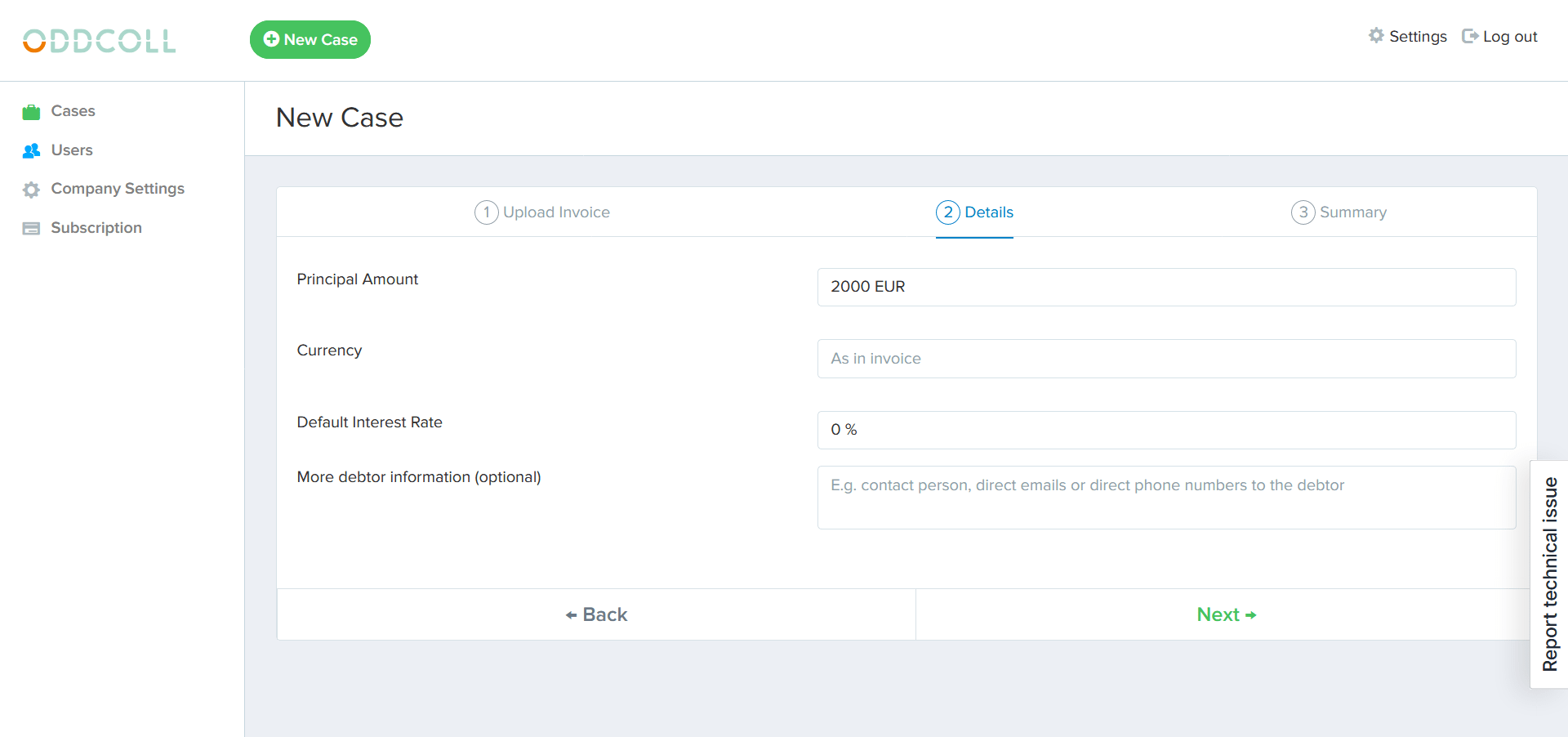
Get paid from your Dutch customer. Quick and easy.
Submit your Dutch debt.
In the Netherlands, our debt collection department begins the debt collection.
After successful collection, the recovered amount is transferred to you.
Your biggest chances to get paid!
Debt collection experts on site throughout the Netherlands.
Accessible national Dutch expertise just by filing your case.
No win no fee. You only pay if we are successful.
Debt collection in Amsterdam
Understanding the unique financial landscape of the Netherlands, such as Amsterdam and other major cities, local expertise to handle your debt recovery efficiently. Our dedicated team and intuitive platform ensure a smooth process, helping you recover debts swiftly while keeping you well-informed every step of the way. We prioritize maintaining positive relationships and protecting your reputation throughout the recovery process. With our comprehensive support, you can focus on your core business while we manage the complexities of debt collection.
Our approach to effective debt recovery in the Netherlands.
Oddcoll offers services for international debt collection to companies that have difficulty getting customers abroad to pay and prioritize their claims.
Our strategy is that effective debt collection must be carried out in the same country in which the debtor is located. In this case, the Netherlands. In addition, we believe that debt collection should not be time-consuming.
To meet this, we have hand-picked high performing national Debt Collectors from around the world and gathered them on our easy-to-use platform.
So when you upload your invoice, our Dutch debt collection company, with special expertise on the conditions in the Netherlands, will immediately start collecting your invoice.
Our Debt Collection Agency in the Netherlands.
The Netherlands has a long tradition of international trade and is an attractive country for many companies to sell their goods/services to.
But if, as a company, you face a situation where your Dutch customer does not pay his invoice on time, what do you do then?
After payment reminders have been sent, you should take help from a Dutch debt collection company. An expert on the conditions for recovery of claims in the Netherlands.
Our accredited partner is CollectMasters B.V. and they will start to collect your B2B claim as soon as you upload the unpaid invoice against your Dutch debtor.
Introduce your company in a few sentences?
We are a fast-growing Debt Collection company exactly in the centre of our country. We employ about 40 people nowadays and have some major clients. Almost all our personnel is university educated, young and eager to work. We go a lot further with contacting debtors than the 5 big collection companies overhere, and that is why our success rate is much higher.
What is your success rate?
For our major clients we collect about 80% of their outstanding debts (while the 5 biggest collection companies in Holland collect maybe 15%)
What does legal actions cost?
You have to pay the bailiff about € 100,- to get the debtor summoned to Court. The Court fee is about € 500 – € 1.250. Our legal fee is € 125 per hour.
If you take legal actions in a case and win in court, are you able to always add the legal costs that the client has paid to the debt and it will be paid by the debtor?
Yes, almost all costs are mentioned in the verdict which the debtor has to pay. Only the (our) legal costs are often maximized at about € 600,-
Debt collection in the Netherlands through legal action.
If no action in the voluntary debt collection phase helps against the debtor in the Netherlands, then it may be necessary to escalate the debt collection in the Netherlands further by initiating legal action.
In the area of private law, the Dutch legal system has three kinds of judiciary: district courts, courts of appeal, and the Supreme Court of the Netherlands (Hoge Raad Nederlanden). The civil court hears lawsuits between two sides (individuals or legal entities).
The Netherlands was being split into ten judicial divisions each with its own court, since April 1, 2013: eleven courts with jurisdiction over four regions. Also, the Netherlands has four appellate courts and one Supreme Court.
The district court is the first instance for a new case and this is where a legal case usually starts. Anyone who disagrees with a judicial decision will take their case to the appeals courts. The Supreme Court is the final resort.
Unless the statute specifies differently, a lawsuit is filed with that district court where the defendant is located.
The formal language of legal cases in the Netherlands is Dutch. This implies that the summons or the (printed) application for the start of the trial must be addressed in Dutch.
When you file a lawsuit, you must pay a legal cost to the authorities in the Netherlands. The cost is determined by the form of conflict and the sum at stake.
“Order for Payment” in the Netherlands.
In the Netherlands, like many other countries, there is a simplified legal process.
Intended for simpler types of cases. (Like debt collection cases in the Netherlands.) Where one party has an unpaid claim against another party. A claim that is simply not paid, but that there is still no type of dispute / disagreement between the parties.
The Netherlands’ streamlined judicial collection process aims to make these “simpler” cases to be handled more easily and cheaply than in regular legal proceedings.
It is a situation that all parties benefit from.
So, what are the prerequisites for using the simplified procedure?
It’s just about the amount of the claim. The amount may not exceed 25,000 Euros.
The parties have the freedom to argue their own argument in these situations. (In other words – no legal representative is required by law)
Furthermore, the appeals are heard by a sole judge, i.e. a single judge seated alone.
Enforcement of a claim in the Netherlands.
When is this relevant? When you have a debt collection case in the Netherlands in which you have not been paid and you have subsequently taken the case further legally.
The court issues a verdict by the end of the legal case. A party (the debtor) may be directed to fulfill its duties to the other party in this judgment (the creditor).
If the debtor refuses to comply willingly, the creditor may compel compliance by using enforcement laws.
The compliance (execution) of a decision under which the court has directed performance is governed by this field of law.
Court bailiffs (gerechtsdeurwaarders), also known as bailiffs (deurwaarders), are allowed to execute judgments and verdicts and are directed to do so by creditors seeking their payment by filing applications for enforcement.
If you choose to use the tactics authorized under legislation, you must meet two conditions:
1. You must have an implementable document (enforcement title), such as an verdict or judgment from the civil law proceedings.
2. You must, prior to enforcement, serve the judgment or verdict to the opposition party (the debtor)
The appellant and complainant who appeared in court receive a copy of the verdict from the court registrar. The group authorised to execute the judgment gets a copy in enforceable form as it is a definitive judgement involving a judicial order. A free bailiff’s copy (grosse) of the judgement is given to the parties. This is a genuine copy of the decision. That is a judicial order that has been made enforceable. Only after this bailiff’s copy has been released may enforcement measures be taken. A notarial deed may also be provided with a bailiff’s copy, or first validated copy. You authorise the bailiff to take compliance measures by handing over this paper.
The bailiff serve the bailiff’s copy to the debtor before any enforcement actions can be taken. This is so that the debtor will be alerted once again to the claim and given some time to fulfill his payment obligation before any enforcement measures are initiated.
Bankruptcy proceedings in the Netherlands.
If a corporation is in economic difficulties or is unable to meet its obligations, each nation has clear procedures in place to resolve these kind of problem.
Bankruptcy proceedings vary in terms of their goals:
- If the enterprise may be saved or is profitable, the claims can be restructured (usually in agreement with creditors). This is to protect the company and its employees.
- If the corporation can’t be spared, it must be shut down (it’ll ‘go bankrupt’).
Creditors may no longer pursue individual steps to recover their claims as the insolvency proceedings has started. This is to guarantee that all claims from all creditors are treated equall.
A creditor must be able to prove his claim to the liquidator in the bankruptcy estate.
When you are in need of debt collection services because a customer in the Netherlands does not pay their invoice. Do not despair. Oddcoll is here to help you. Contact our debt collection specialists for your questions about debt collection in the Netherlands, or upload your claim on our platform to get started with the collection today.
See how easy it is to get started with your case!