
Debt collection Europe
- Debt collection Europe – that covers all European countries.
- Risk-free. Pay only if we succeed.

 An international collection agency that is rated 9,4 out of 10 based on 72 reviews on Kiyoh!
Get paid by customers from all over Europe
Need help with debt collection in Europe? Do you have customers scattered across the continent who have not paid their invoices? No problem. Oddcoll can help you with European debt collection no matter where your customers are located. Read on to see how.
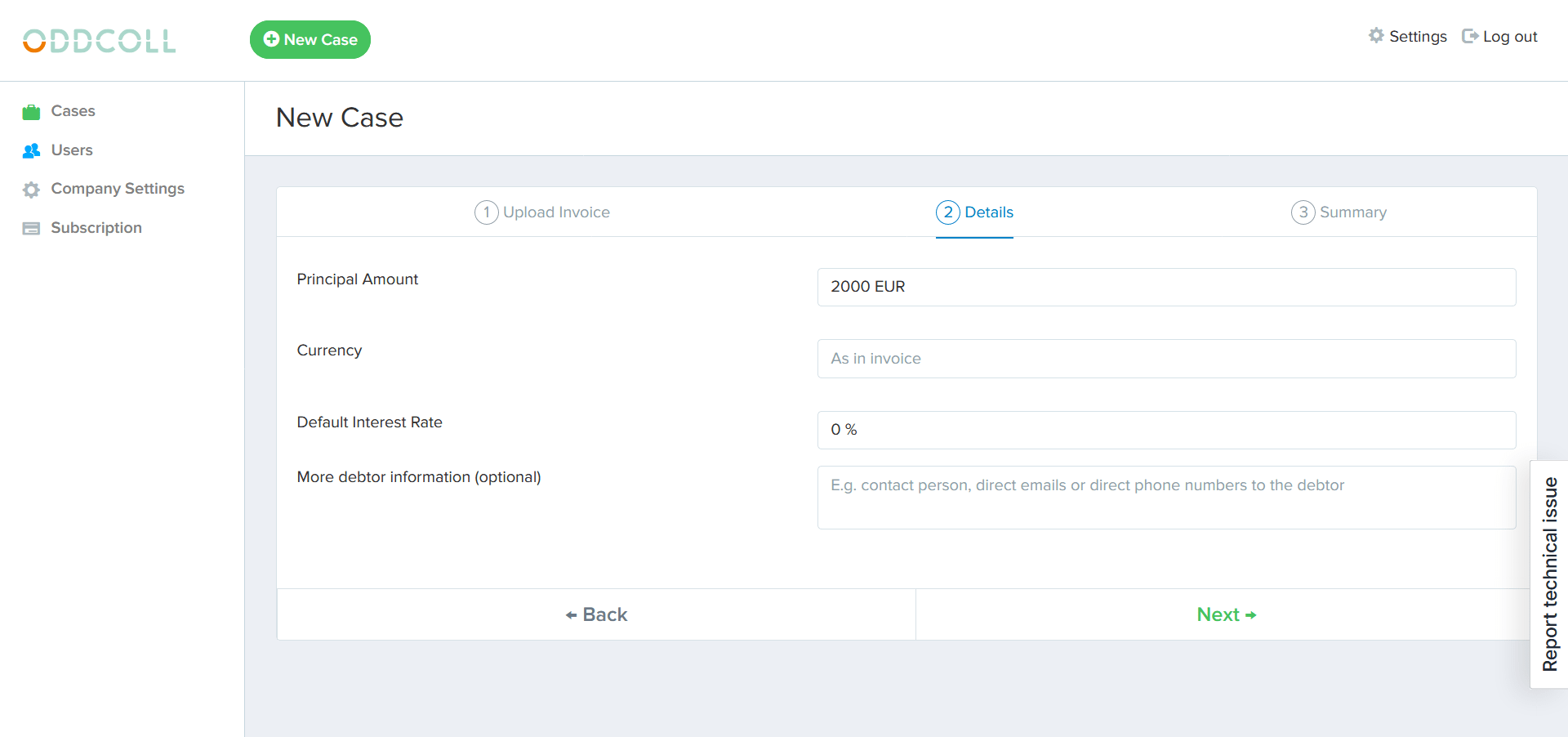
European debt collection in three simple steps
1, You upload your unpaid European invoices.
2, Our debt collection agency or law firm in your customer’s European country starts the debt collection process.
3, The money is transferred to you directly when payment is made by the debtor.
A few reasons to use Oddcoll for debt collection in Europe.
The best national debt collection agencies and law firms for debt collection in Europe.
Pay only for successful debt collection.
Full knowledge of local laws, the local culture and the business culture in the various european countries.
Our local approach. We collect your debt directly in the European country where your debtor is located.
What is Oddcoll
For companies selling their products or services abroad, the collection of European claims can be a hassle.
Different laws, customs, and cultures make it a near impossible task to solve from another country. In addition, debt collectors need national permits to carry out collection operations.
Oddcoll is a platform that simplifies debt collection in Europe for creditors. We have brought together the best national debt collection agencies and law firms in Europe to form our international debt collection platform.
We can, therefore, provide first-class European Debt Recovery services to our clients no matter where in Europe their debtors are located.
All you need to know about international debt collection in 60 sec.
Our European debt collection agencies and law firms.
Different countries have different practices as to whether debt collection agencies or law firms are responsible for recovering overdue invoices in the European country concerned.
We always make sure to maximise your chances of getting paid by using the most appropriate one in each country.
We have selected our debt collection partners across Europe based on the fact that they are debt collection agencies or law firms with a great track-record, and that previous clients are satisfied with their work.
Of course, they have all the permits from their country’s authorities to carry out debt collection activities in their country.
We monitor the quality of the work of our debt collection agencies and law firms so that they consistently deliver good results for clients.
Risk-free European debt collection. You only pay if we perform.
The price is fixed and transparent no matter where in Europe you need debt collection.
You only pay when money is actually collected. A commission fee of 9.5% of the amount recovered by our debt collection agency or law firm.
This means that you get back 90.5% of the amount recovered.
Our model means that we have the same incentive as you to ensure that your debts are actually recovered.
That is why our partners will do everything in their power to make sure you get your money back.
About debt collection in Europe.
Europe is made up of many different countries with different legal systems, languages and cultures. From the eastern europe to all the countries in the european union.
What do we mean by debt collection in Europe.
It is about the recovery of unpaid invoices from debtors in European countries.
We focus mainly on situations where the creditor is in a different country from the debtor. That is, cross-border European debt collection.
With this definition, the debt collection process can be said to be quite complex with many different steps.
From the pre-litigation stage where recovery is attempted through contact with the debtor, to the judicial stage where a creditor needs to take legal action and sometimes even needs to apply for enforcement of a claim. In addition, insolvency proceedings may also be involved if the debtor is permanently insolvent.
Are there any common laws and rules that apply to debt recovery in Europe?
Basically, a country’s own national law determines how a claim can be collected.
In short, if you want to collect an unpaid invoice from a French debtor, French rules apply. This applies at all phases of the debt collection process in Europe.
Consequently, the laws and rules differ enormously between countries. It is because of this fact that national expertise in the country where the debtor is located is required for effective debt collection in Europe.
It should nevertheless be mentioned that measures have been taken, particularly at EU level, to facilitate cross-border debt collection in Europe. A brief review of these initiatives will be presented below in each relevant section.
The following is a description of the different phases when a European claim is collected.
 The “amicable” debt collection phase in Europe.
 The “amicable” debt collection phase in Europe.
The first step in the European debt collection process is the “amicable” phase.
This means that the Debt Collector, without taking legal action, tries to induce the debtor to pay off his debt. They achieve this through debt collection demands, phone calls, threats of taking legal actions. etc.
This collection phase looks a little different, country by country, and also between different collection agencies and law firms. There are national laws and rules in each European country on how to behave when recovering invoices from debtors in that country. This may concern, for example, how and when to contact debtors. In addition, each debt collection agency and law firm has developed different procedures to improve the efficiency of their debt collection activities.
In addition, in virtually every European country, authorization is required to carry out debt collection activities against debtors within the country.
Our tip is to use a debt collector (collection agency or law firm) located in the same country as your debtor!
There are two reasons for it.
1 – Debt collectors need national authorization (in the debtor’s country) to carry out debt collection activities.
2 – Every country has differences in legislation, business practices, cultures, language etc.
 In-court Debt Recovery in Europe.
 In-court Debt Recovery in Europe.
Should it happen that the debtor does not pay in this first collection phase, then it may be time to escalate collection actions in Europe by taking legal action.
In short, judicial debt collection means that you sue someone in court. A creditor takes legal action to obtain legal recognition that the debt actually exists. This is a prerequisite for enforcement against the debtor later in the process.
As mentioned earlier, each country has different rules and processes for suing a counterparty in court in a civil matter.
To go into detail about the procedural rules of all these countries is too big a subject for this presentation (and beyond my competence). Instead, we thought we would go through the common features and the specific challenges of being in different countries.
In which country do you sue the debtor?
The first question that arises: in which country do you take your customer to court?
The answer to this is not entirely simple or obvious.
In technical terms, this is a question that reads, “which country and which court has jurisdiction to rule on a specific case”.
To complicate matters further, countries also have different rules for determining who has jurisdiction in a case.
But very simplistically we can say that;
1, Most countries’ laws respect the choices that two companies make with each other in an agreement on jurisdiction. Two companies can in other words can agree with each other which country’s court will have jurisdiction.
2, If no choice of jurisdiction clause is written, the general rule is to sue your counterparty in the country where the counterparty is domiciled or has its seat. Like all other law, there are, as usual, exceptions to this general rule. But this is the starting point.
(Specific rules are laid down in EU regulations ( The Brussels 1 Regulation) and are thus applicable as law in EU Member States. The same rules on jurisdiction therefore apply to all EU Member States. The same rules apply in principle to Norway, Switzerland and Iceland under the Lugano Convention.)
Which country’s law applies to the dispute?
Another question that arises once you have identified which country’s court is relevant is; Which country’s law applies when we resolve our dispute? This may sound a bit strange, but a country’s court can actually decide an individual case on the basis of another country’s law. This is called conflict of laws.
The principle for determining the governing law is similar to the principles for determining jurisdiction.
Each country has its own rules for determining the applicable law. Two companies can agree themselves which country’s rules will apply.
For EU countries, the rules set out in the Rome 1 Regulation apply.
“Order for payment” and “Small claims procedures” – Simplified legal procedures.
In most European countries, there is simplified procedure for uncontested claims (“Order for payment”). The existence of this process varies from country to country. This procedure is usually simpler, faster and less expensive than ordinary court proceedings.
“Orders for payment” are ideal for debt collection cases in Europe, as these are uncontested cases concerning a specific sum of money. However, the prevalence of this type of process varies between European countries.
European Enforcement proceedings.
Should the debtor still not pay, despite the court’s decision, the Creditor must apply for Enforcement. He needs to do that in the country where the debtor has assets.
This means that the authorities help the creditor to recover his money from his debtor. This may involve, for example, the compulsory taking over of the debtor’s property and selling it at auction.
As a general rule, a judgment from the same country as where the enforcement procedure takes place is required.
Sometimes it is possible to enforce a judgment from another country. This requires “Recognition” of the judgment in the country where it is to be enforced. A judgment from another country in Europe can often be recognized in another European country. This means that a judgment from Portugal, for example, can usually be enforced in Germany. Rules on this can be found in the Brussels 1 Regulation and the Lugano Convention.
EU instruments to facilitate cross-border debt collection in Europe.
- The European Small Claims Procedure.
This is a cross-border procedure applicable between EU Member States for disputes involving small amounts.
- The European Enforcement Order for Uncontested Claims. (EEO)
This process facilitates the recognition and enforcement of judgments from other EU Member States.
- The European Order for Payment Procedure.
This is a cross-border version of the payment order. An application can be made from another EU country.
This is how our debt collection service works.
Are you in need of debt collection in Europe? Then you’ve come to the right place. Oddcoll helps companies that have sales abroad and find it difficult to get paid from customers in European countries. If you have any questions about debt collection in Europe, don’t hesitate to get in touch. Want to get started with debt collection? Simply create an account and upload your European invoices.
See how easy it is to get started with your case!